You do not need a boat.
You do not need experience.
You need a first day.
Start with a clear path, learn from certified instructors and build real confidence aboard a sailboat on Lake St. Clair.
Every sailor once
knew nothing.
The unfamiliar words, moving boat and changing wind can make sailing look harder from shore than it feels with a patient instructor beside you.
You do not need to grow up around boats, own expensive equipment or memorize an entire textbook before you begin. You need preparation, safe instruction and enough practice for each new action to become familiar.
“I need my own boat.”
You train aboard the school’s sailboat. Ownership can wait until you understand what kind of sailing you enjoy.
“I must already know the terms.”
Learning the language is part of the course. A little preparation simply helps the first day flow more easily.
“I am too old to start.”
Adults begin sailing at many ages. Clear communication, judgment and steady practice matter more than looking athletic.
Five steps from curious
to capable.
There is no shortcut to good seamanship, but there is a clear sequence. Start with the foundation, practice deliberately and add responsibility as your skills grow.
- 01CHOOSE
Start with a clear goal
Decide whether you want relaxed day sailing, recognized certification, racing experience or a future cruising adventure. Your goal helps shape the right first course.
- 02PREPARE
Learn the basic language
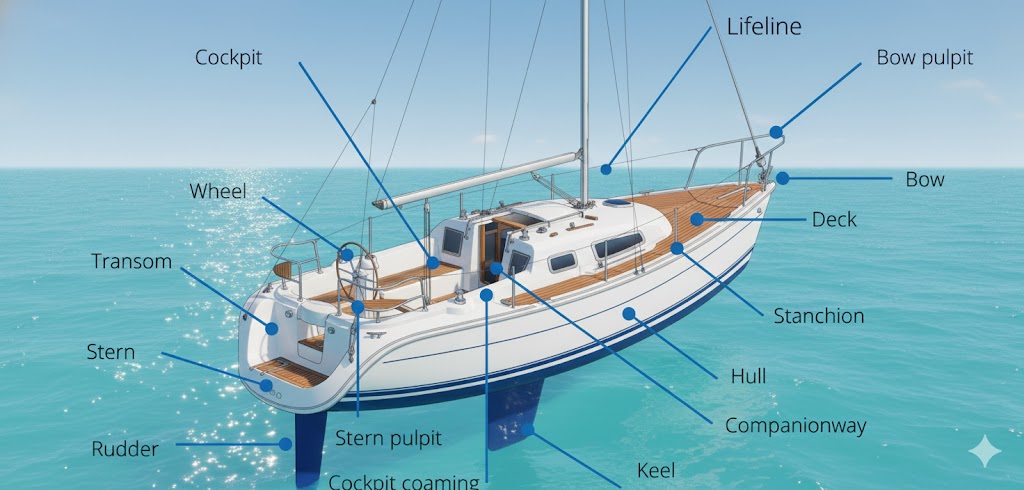
Know a few essentials—port, starboard, bow, stern, helm, tack and jibe—so the instructor’s directions feel familiar when you step aboard.
- 03TRAIN
Take ASA 101
A structured beginner course connects terminology, safety and sail theory with coached practice on a real keelboat. No prerequisite sailing experience is required.
- 04PRACTICE
Build tiller time
Skills become dependable through repetition. Join practice sails, crew for other sailors or schedule additional instruction to keep steering, trimming and maneuvering.
- 05CONTINUE
Grow at your pace
Move into ASA 103 and ASA 104 when you are ready for coastal cruising, boat systems, navigation and a path toward bareboat chartering.
The first skills
that make you useful aboard.
Beginner training is not about collecting nautical vocabulary. It is about understanding the boat well enough to communicate, act safely and contribute as both skipper and crew.
Boat language
Identify the parts of a sailboat and communicate clearly with the skipper and crew.
Wind awareness
Recognize wind direction, points of sail and how a boat responds as its course changes.
Sail handling
Hoist, lower and trim sails while safely managing sheets, halyards and basic knots.
Boat control
Steer, tack, jibe and recover from common situations with coordinated crew actions.
Docking basics
Prepare dock lines and fenders and understand departures, arrivals and auxiliary power.
Safety & rules
Apply navigation rules, crew-overboard procedures and good seamanship habits.
Confidence is built
through repetition.
Reading prepares your mind. Time aboard teaches your hands and senses. You learn when to steer, ease a sheet, move your weight, communicate and pause before a situation becomes rushed.
Certification is a milestone.
Practice makes the sailor.
The strongest new sailors keep using what they learned. Regular time aboard helps knowledge become judgment and maneuvers become habits.
Practice locally
Join student practice opportunities or schedule focused instruction on the skills you want to improve.
Crew for others
Meet local sailors, volunteer for club sails or racing crews and learn how different skippers organize a boat.
Keep a sailing log
Record dates, conditions, boat type, role and skills practiced so you can see your experience grow.
Continue your education
Move to ASA 103 and ASA 104 when your foundation and goals make the next level useful.
Book early.
Arrive ready to practice.
Lake St. Clair Sailing School asks students to book at least two weeks ahead and read Sailing Made Easy before class. This preserves more of your two days for coached learning aboard.
Learn on
Lake St. Clair.
Train from Lambrecht Marina in Harrison Township, with practical access for students from Macomb County, Oakland County and communities throughout Metro Detroit.
Questions before
your first day.
Starting is easier when you know what the course expects and what can wait until later.
Can I really learn to sail with no previous experience?
Yes. ASA 101 Keelboat Sailing 1 is designed for complete beginners and has no sailing prerequisite. You should study the assigned material before class so your on-water time is more productive.
Do I need to own a sailboat?
No. You train aboard the school’s sailboat, so buying a boat is not part of starting. Many new sailors continue by taking practice sails, crewing, joining a club or booking additional lessons.
How long does the beginner course take?
Lake St. Clair Sailing School currently schedules ASA 101 over two days from 10 a.m. to 4 p.m. each day. Weather and student learning needs can affect the exact flow of instruction.
How much does it cost to start sailing?
The school currently lists ASA 101 at $545. Review the live booking page for current pricing, dates and exactly what is included before making a reservation.
Does attending the class guarantee certification?
No. ASA certification is earned by demonstrating the required sailing skills on the water and passing the written exam. More practice may be recommended before certification when needed.
What should I do after ASA 101?
Keep sailing. Practice as crew and skipper, improve your maneuvers and consider ASA 103 Basic Coastal Cruising when you are ready to expand your knowledge of cruising boats and procedures.
You are not too new.
You are simply at the beginning.
Choose an available ASA 101 date and begin your sailing education on Lake St. Clair.
How to Become a Sailor With No Experience
Stepping onto a boat for the first time can feel like entering a different world with its own language. If you have zero experience, here is your three-step roadmap:
Step 1: Book an ASA 101 Course
Don’t try to teach yourself on a YouTube marathon. A formal ASA 101 Basic Keelboat course at Lake St. Clair Sailing School takes you from “I don’t know what a sail is” to confidently handling a 30-foot boat in just two days.
Step 2: Learn the Language
Before your first class, familiarize yourself with the basics. You don’t need to be an expert, but knowing the difference between Port (Left) and Starboard (Right) will give you a head start
Shutterstock
Step 3: Get “Tiller Time”
The best way to learn is to do. After your course, join a local sailing club or volunteer as “rail meat” (crew) for local races. Sailors are a friendly bunch and are usually happy to have an extra set of hands on deck.
4. Counting the Knots: How Much Does a Sailing License Cost?
Budgeting for a new hobby is important. While “sailing” has a reputation for being expensive, getting certified is actually quite accessible.
Breakdown of Costs at Lake St. Clair
At our school, we offer competitive pricing to get you on the water safely. Here is a general estimate of what to expect:
| Course / Item | Estimated Cost | What’s Included |
| ASA 101 (Basic Keelboat) | $545 | 2 days of instruction, textbook, exam, and certification. |
| ASA 103 (Coastal Cruising) | $595 | Advanced handling and systems training. |
| Combo 101/103 Class | $1,100 | Accelerated 2-day path for both certifications. |