Lake St. Clair Sailing School sailing events
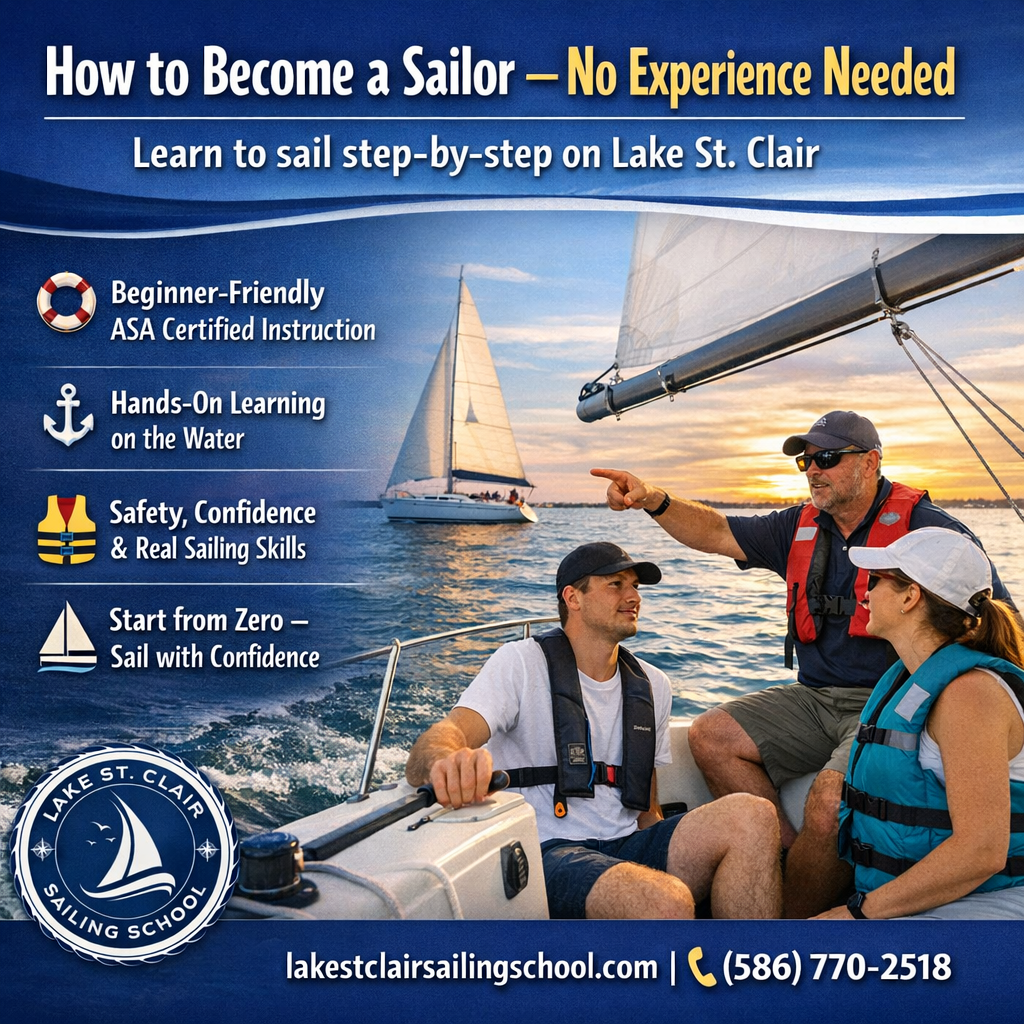
At Lake St. Clair Sailing School, we believe sailing is best learned through a balance of theory, practice, and safety. Our step-by-step approach combines classroom learning with hands-on experience on the water. Visual Learning: We use PowerPoint presentations, diagrams, and small model boats with a fan to demonstrate points of sail and right-of-way rules. Safety & Seamanship: Students learn U.S. Coast Guard sailboat requirements, marine lights and sound signals, essential safety equipment, and key parts of the Collision Regulations. Memorable Instruction: Stories, examples, and repetition help concepts stick and prepare students for real-life scenarios. On-the-Water Training: After classroom sessions, students practice in small, stable boats that give instant feedback and build confidence. This…
Understanding VHF Marine Radio Range for Safe Boating on Lake St. Clair Knowing how far your VHF marine radio can transmit is essential for boating and sailing safety on Lake St. Clair and the Great Lakes. VHF radio range is primarily determined by line of sight, which depends largely on the height of the antennas on both the transmitting and receiving boats or shore stations. In typical conditions, a fixed-mount VHF marine radio has an effective range of 15–25 nautical miles, while a handheld VHF radio has a much shorter range. Key Factors That Affect VHF Marine Radio Range Antenna Height VHF radio signals travel in straight lines, so their range is limited…
The Range of a VHF Marine Radio
Best Points of Sail for Fast Sailing If your goal is speed, knowing the most efficient points of sail is key. Here’s a breakdown of the fastest angles to the wind, based on insights from seasoned sailors: Beam Reach Often regarded as the fastest point of sail for most boats, the beam reach occurs when the wind hits the boat at a 90° angle. This position balances power and efficiency, making it the sweet spot for speed. “Beam reach is still fast, but when the true wind is on our beam, the apparent comes pretty far forward.” “Depends on the wind speed. … ~10kts? Beam reach.” Broad Reach Not quite as quick as…
Best Sail point for fast sailing
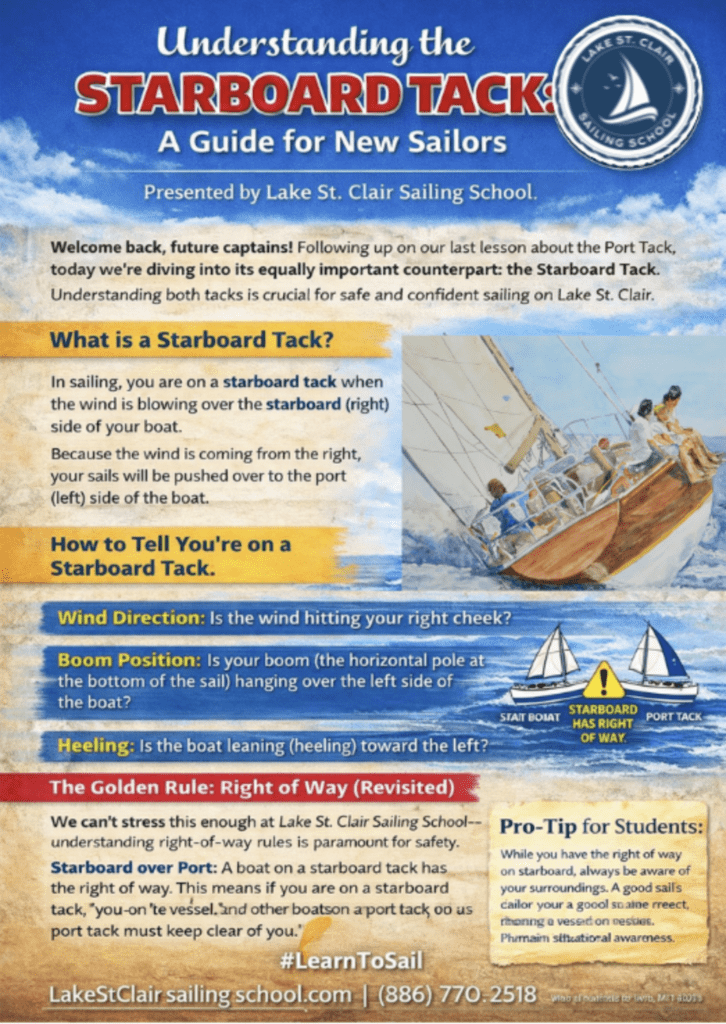
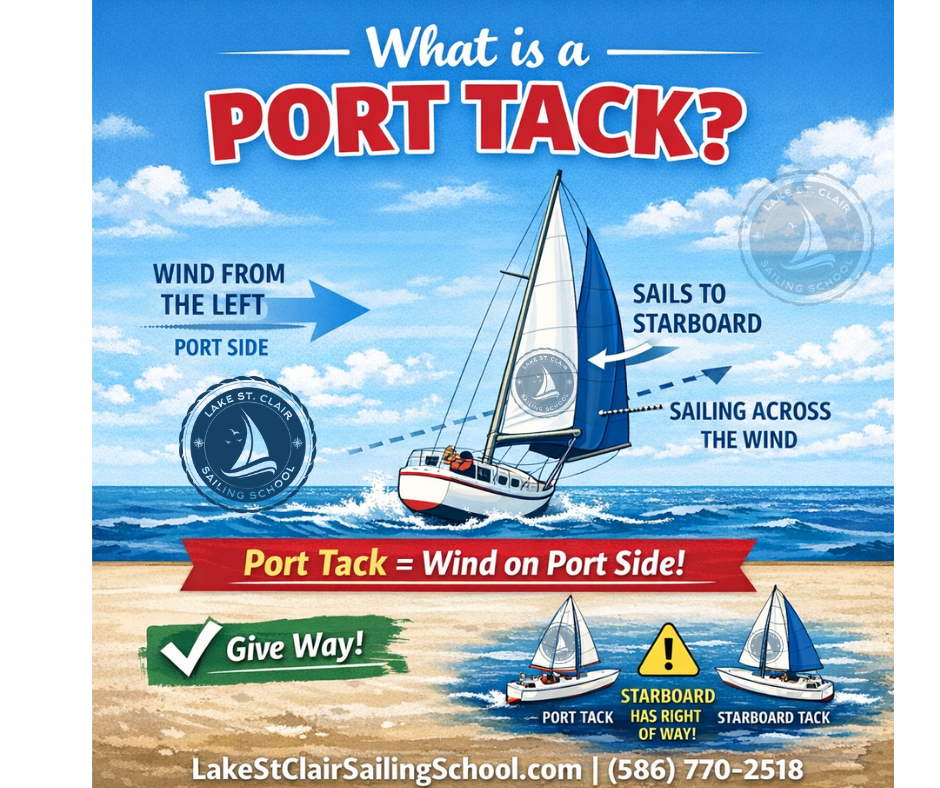
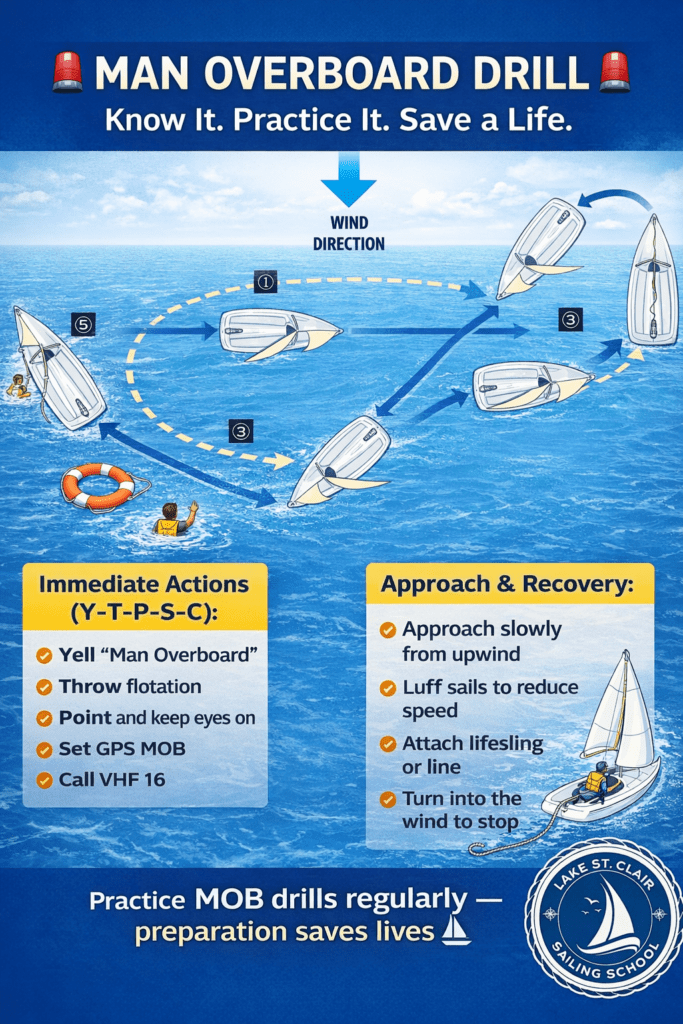
When sailbboats meet on the water, safety depends on knowing who keeps course (stand-on) and who must maneuver (give-way). ✅ Stand-On Vessel = Keeps course and speed⚠️ Give-Way Vessel = Must adjust to avoid collision Key Situations:🔹 Same Tack – The leeward (downwind) boat has right-of-way🔹 Opposite Tacks – The starboard tack boat (wind on right) has right-of-way🔹 Overtaking – The boat being overtaken (ahead) has right-of-way🔹 Power vs. Sail – A sailboat has right-of-way over a powerboat, unless it’s motoring (then it counts as a powerboat) ⚓ Sailboat Right-of-Way Guide ⚓Stay Safe on the Water – Know Who Goes First! 1. Port vs. Starboard Starboard Tack (wind coming over the starboard/right side)…
Understanding Radar Reflectors: A Critical Guide for Enhanced Safety At Lake St. Clair Sailing School, we prioritize not just the joy of sailing, but the paramount importance of safety on the water. A key component of safety, especially on a busy body of water like Lake St. Clair, is ensuring your vessel is visible to others in all conditions. This guide provides a precise overview of radar reflectors, their requirements, and best practices for sailors. The Purpose of a Radar Reflector A radar reflector is a crucial safety device that enhances a vessel's visibility on radar systems. For smaller sailboats and crafts made of non-metallic materials like fiberglass, which are inherently poor at…
Mastering the Points of Sail: A Fundamental Guide for Every Sailor At Lake St. Clair Sailing School, we believe that a strong understanding of core principles is the mark of a proficient sailor. One of the most critical concepts to master is the "points of sail." This framework describes the boat's direction relative to the wind and dictates every action you take on the water—from sail trim to steering. Understanding these points is not merely academic; it is the practical foundation for efficient, controlled, and safe sailing. The Points of Sail Explained The points of sail are best visualized as a circle around the wind direction. Your position on this circle determines your…
British Virgin Islands Catamaran Trip December 27 to January 2nd Starting at $3600 Per Couple in one Cabin Set Sail for Paradise – BVI Catamaran Sailing, December 2025 Why spend December in the cold when you could be island-hopping through crystal-clear Caribbean waters? This year, our Annual Catamaran Winter Getaway is heading to the British Virgin Islands – and you’re invited! Dates: Third Week of December 2025 Starting Point: Nanny Cay Marina, Tortola, BVI Whether you’re looking for the ultimate vacation or want to learn to sail on a catamaran with ASA certification (ASA 103, ASA 104, or ASA 114 available for an additional fee), this trip is for you. What’s Included: US Coast Guard–Licensed Captain and…
Unlocking VMG: More Than Just Boat Speed In sailing, Velocity Made Good (VMG) refers to the component of a sailboat’s speed that is directed directly toward or away from the wind—or, more precisely, how effectively the boat is actually progressing toward a windward or leeward mark. It’s not simply about the boat's raw speed through the water—it’s about how that speed translates into forward progress toward your goal. Why VMG Matters in Racing In fleet racing, especially on upwind or downwind legs, VMG is the key to victory. The boat that consistently posts the highest average VMG typically wins SailZing.comLake Tahoe Sailing. Even if you're physically slower, if you're heading in a direction…
Planning to cross the Canadian border by boat? Here's a step-by-step guide to help ensure a smooth and lawful entry into Canadian waters: 1. Before You Depart Understand CBSA Reporting Requirements:Requirements vary depending on your nationality, travel itinerary, and the number of people onboard. Review the Canada Border Services Agency (CBSA) website for up-to-date details. Identification for All Passengers:Every person onboard must carry valid identification. U.S. citizens need a passport or NEXUS card for themselves and for any children aged 16 and older; children under 16 must have a birth certificate. CANPASS authorization is also accepted. Ensure Admissibility:Foreign nationals must meet the entry criteria under the Immigration and Refugee Protection Act. Know What…
crossing to Canada by Sailboat
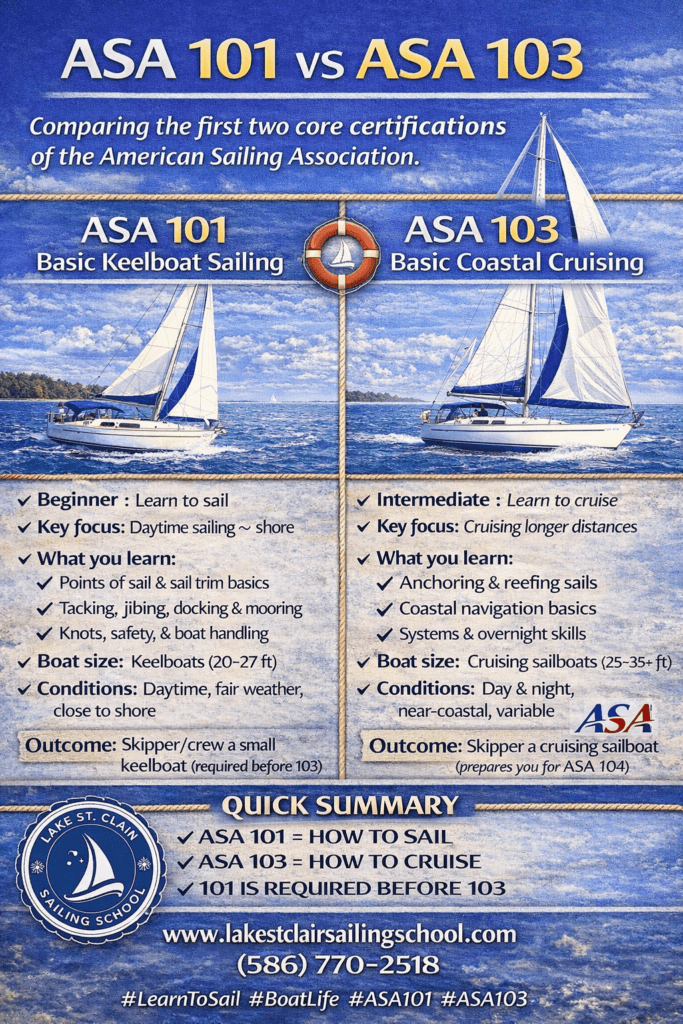
What is IPC The International Proficiency Certificate (IPC) is a certification designed to demonstrate competence in sailing when chartering in certain international waters, particularly within the European Union (EU). It serves as a proof of bareboat charter competency and is recognized in over 30 countries. How to Obtain IPC American Sailing Association (ASA): Offers the IPC to individuals who have completed ASA 101, 103, and 104 courses at an affiliated school. To obtain the International Proficiency Certificate (IPC)—a certification often required for chartering sailboats in certain international waters, especially within the European Union—you must first complete ASA 104 (Bareboat Cruising). ASA 104 requires prior certification in ASA 101 (Basic Keelboat Sailing) and ASA 103 (Coastal Cruising). You Can Join…