

Master Your Mainsail: The Unsung Power of the Vang
At Lake St. Clair Sailing School, we spend a lot of time on the mainsheet and traveler. But there’s another control line on your boom that often gets overlooked: the vang (or boom vang). This small but mighty tool is a secret weapon for smoother sailing, better control, and even increased safety.
If you’ve ever wondered how to fine-tune your mainsail’s shape or maintain control in a puff, it’s time to get friendly with your vang.
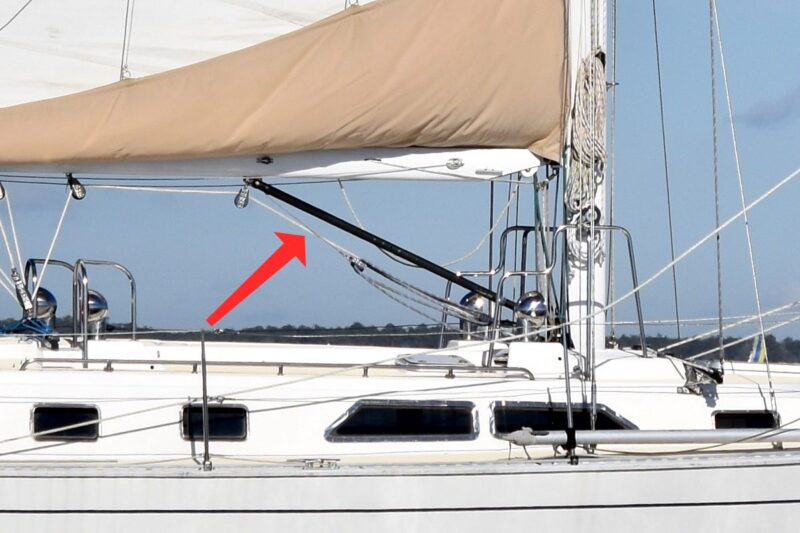
What Does BoomVangActually Do?
In simple terms, the vang is your primary tool for controlling twist in your mainsail. Think of twist as the sail’s shape from top to bottom. Too much twist can spill power and make the boat harder to handle.
The vang also helps control your boom height and can even provide a bit of extra stability. While it might not be adjusted on every tack like the mainsheet, it comes into play when you need a sharp, focused adjustment.
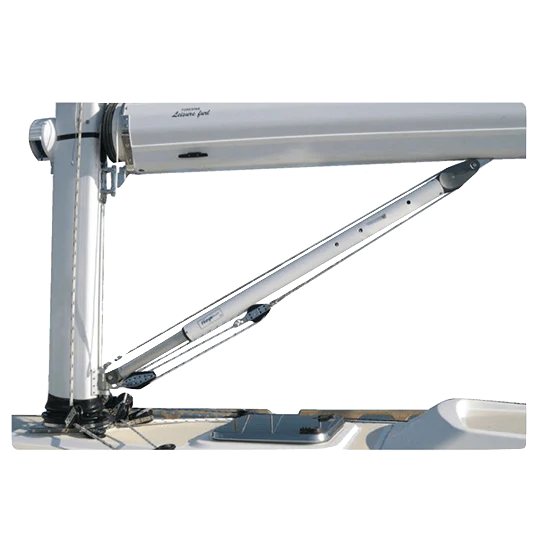
BoomVang in Action: When and How to Use It
So, when should you reach for the vang? Here are the key scenarios we teach our students on Lake St. Clair:
- 1. On a Reach (The Vang’s Time to Shine!)
When you’re on a beam reach or broader (wind coming across the side of the boat), your mainsheet is eased. With the sheet loose, the vang becomes the star of the show for controlling twist. It keeps the top of your mainsail from luffing inefficiency and ensures your tell-tales are streaming perfectly. This is where you’ll feel its power most directly. - 2. Taming the Puffs with “Vang Sheeting”
This is a game-changer for upwind sailing. When a puff hits and you need to depower, your first instinct might be to ease the mainsheet. But if your vang is loose, easing the sheet will cause the top of the sail to twist off, losing all your efficient trim. - Here’s the pro move: ease the mainsheet while using the vang to control the twist. By keeping light tension on the vang before you ease, it restrains the top of the sail. This allows you to spill wind, reduce heel, and keep the boat flat and fast without sacrificing your sail shape. It’s a more precise way to manage power.
- 3. For In-Boom Furling & Safety
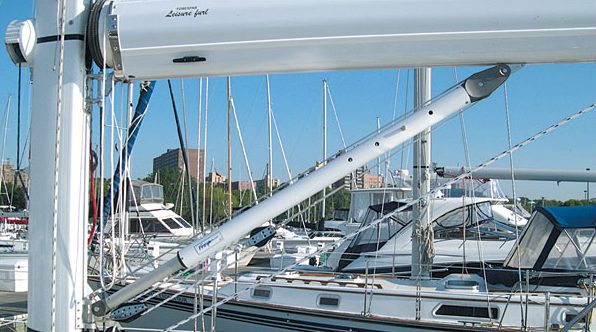
If you have an in-boom furling system, the vang is your best friend. It helps hold the boom at the perfect angle for furling and unfurling, minimizing sail flogging and potential damage. You can even mark your vang lines for the ideal furling position. As a bonus, a tight vang can act as a light-duty backup preventer.
How to Make Your Vang Work Better for You
Many boats come with a vang that isn’t powerful enough for the loads it needs to handle. A simple upgrade can make a world of difference:
- Increase Power: Talk to your sailmaker about upgrading your purchase system (e.g., from a 4:1 to an 8:1 ratio). A more powerful vang is easier to trim and more effective.
- Improve Accessibility: If your vang control is stuck at the mast, no one will use it effectively. Consider running the control line back to the cockpit. It’s the perfect implementation of “if you build it, they will trim it!” Easy access leads to constant, fine-tuned adjustments.
The Bottom Line
The vang is far from a “set-it-and-forget-it” tool. When used properly, it’s synonymous with control. It gives you the power to flatten your sail, manage twist in puffs, and sail more efficiently across all points of sail.
Ready to put these tips into practice? On your next sail out on Lake St. Clair, make it a point to experiment with your vang. Feel how it changes the helm and the heel of the boat. And if you want to master it, sign up for a course with us! We’ll help you transform this overlooked control into one of your most trusted tools on the water.
Fair winds and happy sailing!